
For municipalities and fire services
Stay operational when the power goes.
A siren test checks the siren. It does not check whether the fire station still has light afterwards, whether the radios keep charging, or whether the municipal office stays reachable. That is what we build storage units for.
The solution
Storage that takes over when the grid fails.
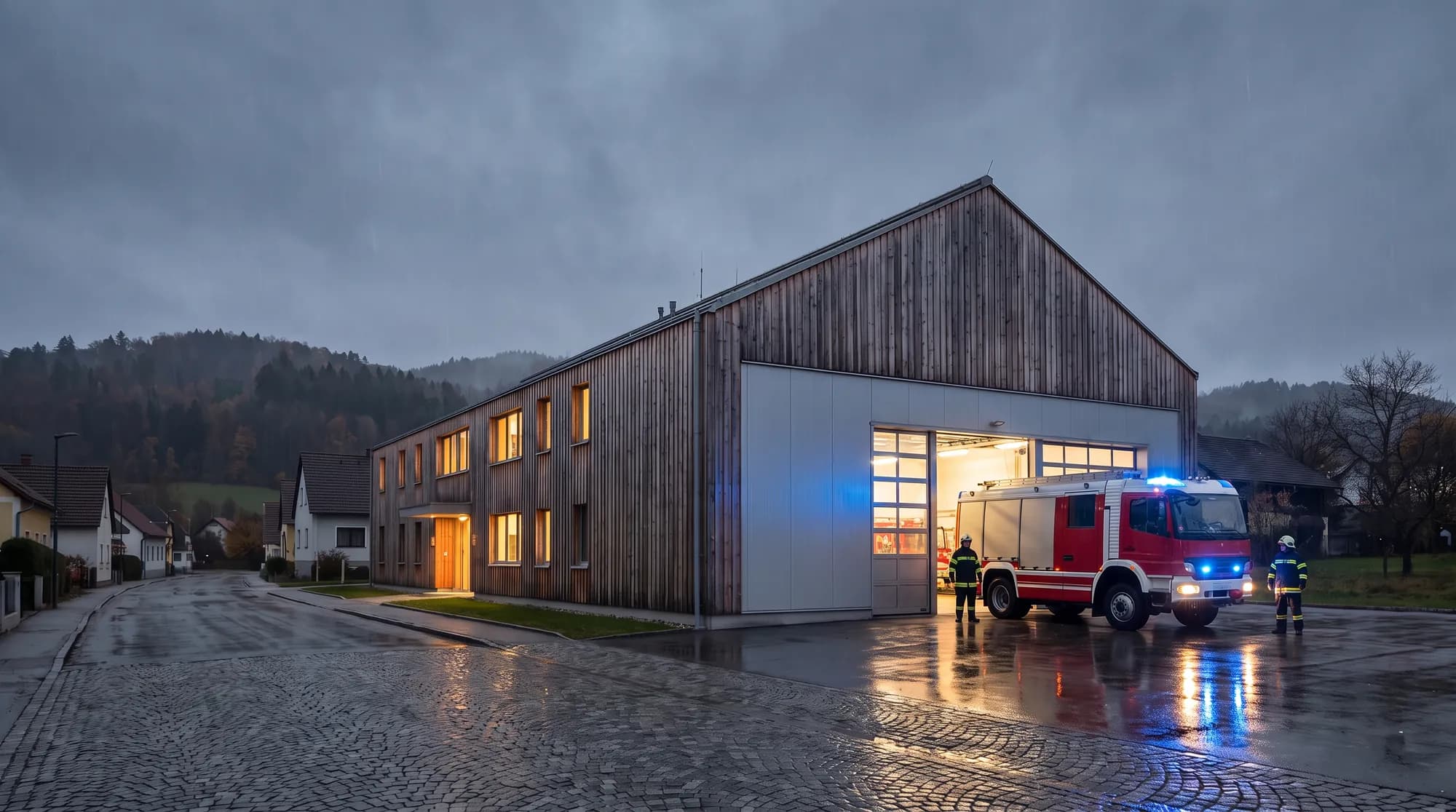
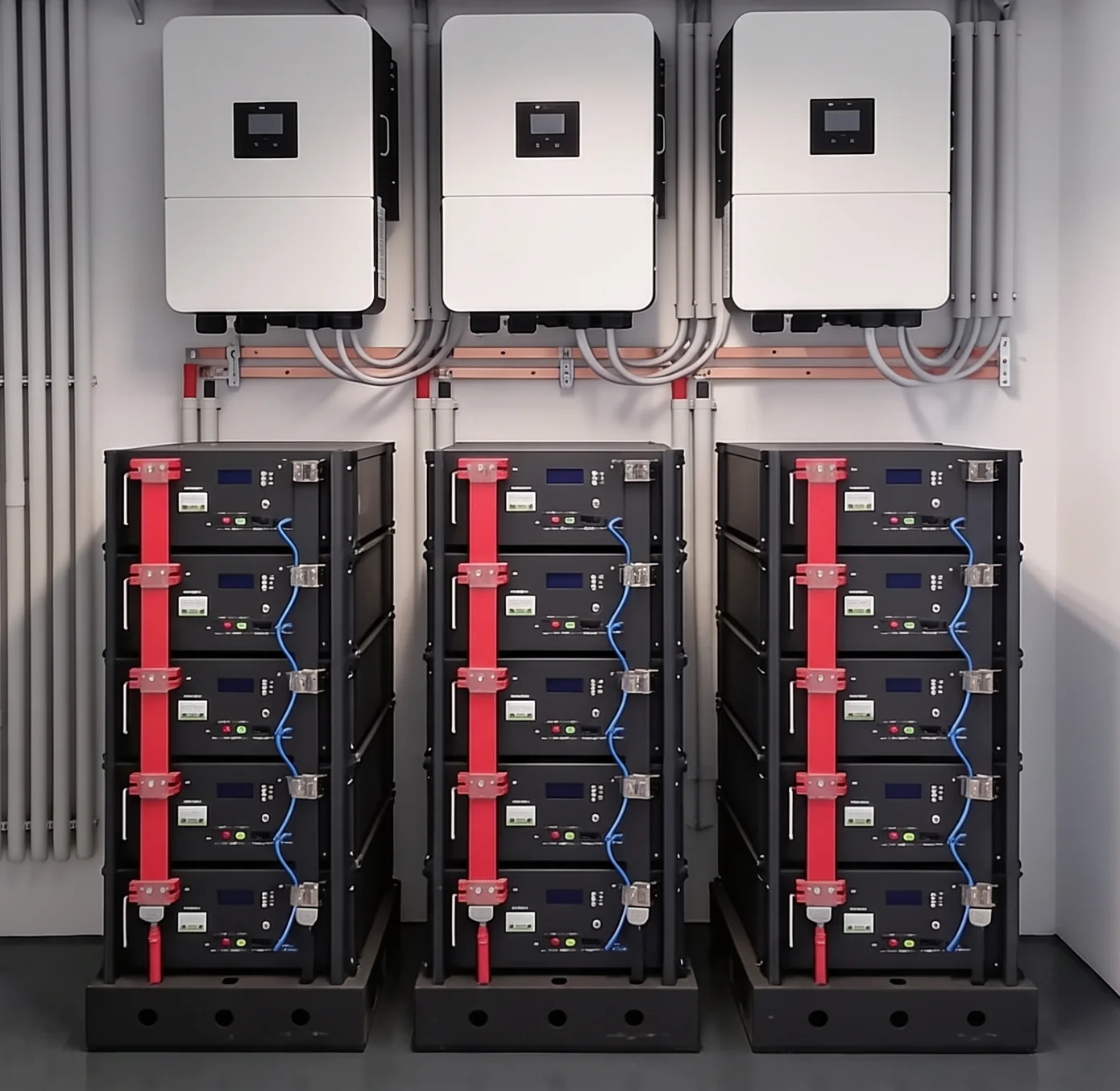
COR.stor is integrated into the municipal building and can keep the essential loads running: lighting, radio, phones, IT, bay doors, sliding doors, chargers. If the grid fails, COR.stor typically takes over within 20 milliseconds — island and black-start capable. The fire station and the municipal office can keep key functions supplied during a grid outage.
In everyday operation the same storage keeps working: it stores the power from your PV system and can lower your energy costs. Backup power that doesn’t sit in a corner but works all year round.
Calculator
How long does it last?
In an emergency, not the whole building runs — only what matters for operational readiness. Tick what should keep running at your site.
Storage size
Season
Your result
How long COR.stor lasts without sun
about 29 hours
Continuous load 2.3 kW · 1 × 70 kWh
Plus, per sunny day with PV
+ 20 hours
Recharging about 47 kWh per sunny day
Guide values for the load, not measurements. Pumps for water supply or sewage treatment need considerably more power and are calculated individually. We work it out precisely in the site check.
Every first Saturday in October, the sirens sound.
Austria’s nationwide civil protection siren test checks a single link in the chain: whether the warning signal arrives. What happens afterwards is not tested — and that is exactly where the gap sits.
The Austrian Civil Protection Association advises households to prepare for ten to fourteen days. 87 per cent of Austrians, by contrast, expect power to return within 24 hours. The time between that expectation and that recommendation is the time a municipality, too, has to bridge on its own.
Sources: Austrian Civil Protection Association (Österreichischer Zivilschutzverband), 10–14 day preparedness recommendation · EY Blackout Readiness Check, 13 Jan 2026 (public expectations).
The first seconds decide.
A storage unit only helps if it is already in place when the grid fails. So what counts is not what it can do, but when it does it.
Second 0
The grid fails.
Lighting, radio, doors, servers, cooling — all at once.
typically 20 ms
The storage unit takes over.
Short enough for most equipment. For servers we additionally recommend a UPS.
Hour 1 to 24
Operations can continue.
Command post, lighting, door systems, chargers, communication. How long depends on what is connected — we work that through together during the site review.
From day 2
Recharge rather than give up.
Rooftop photovoltaics recharge the storage unit during the day. An existing generator can be integrated and starts by itself once the state of charge drops below a set threshold.
What COR contributes
What COR contributes to your municipality.
Store
COR.stor
COR.stor offers 70 kWh of usable capacity, expandable to 210 kWh, and typically takes over within 20 ms when the grid fails.
Calculate your storage: COR.storGenerate
COR.gen
The heat and power plant heats with wood pellets and generates up to 2.2 kW of power at the same time — especially in winter. Available in COR.set.
Discover COR.set: COR.genControl
COR.app
The COR Platform regulates heat and power as needed. You can see the status in the COR.app.
Explore the controls: COR.appProven, not claimed.
The technical figures come from the data sheet and are open to you before the decision — not only after it.
Switchover time on grid failure
Capable of island mode and black start.
usable
expandable to 210 kWh
Usable when expanded
Modularly expandable, up to three units in the standard configuration.
Power per inverter system
One or two inverters, run in parallel.
Cell chemistry
Cobalt-free, passively cooled battery, all-metal enclosure.
Engineering
Engineered in Böheimkirchen, Lower Austria.
Four places where the power must not fail.
Fire service
The fire station.
Command post, radio, door systems and chargers can stay in operation. Whoever is needed during a blackout needs power themselves.
Administration
The municipal office.
Telephony, network and civil registration can keep running. The municipality stays reachable for its residents, even during a grid outage.
Utilities
Water and wastewater.
Pumps and controls in the reservoir or treatment plant need power around the clock. A failure here becomes visible within hours.
Shelter
School, gym, emergency shelter.
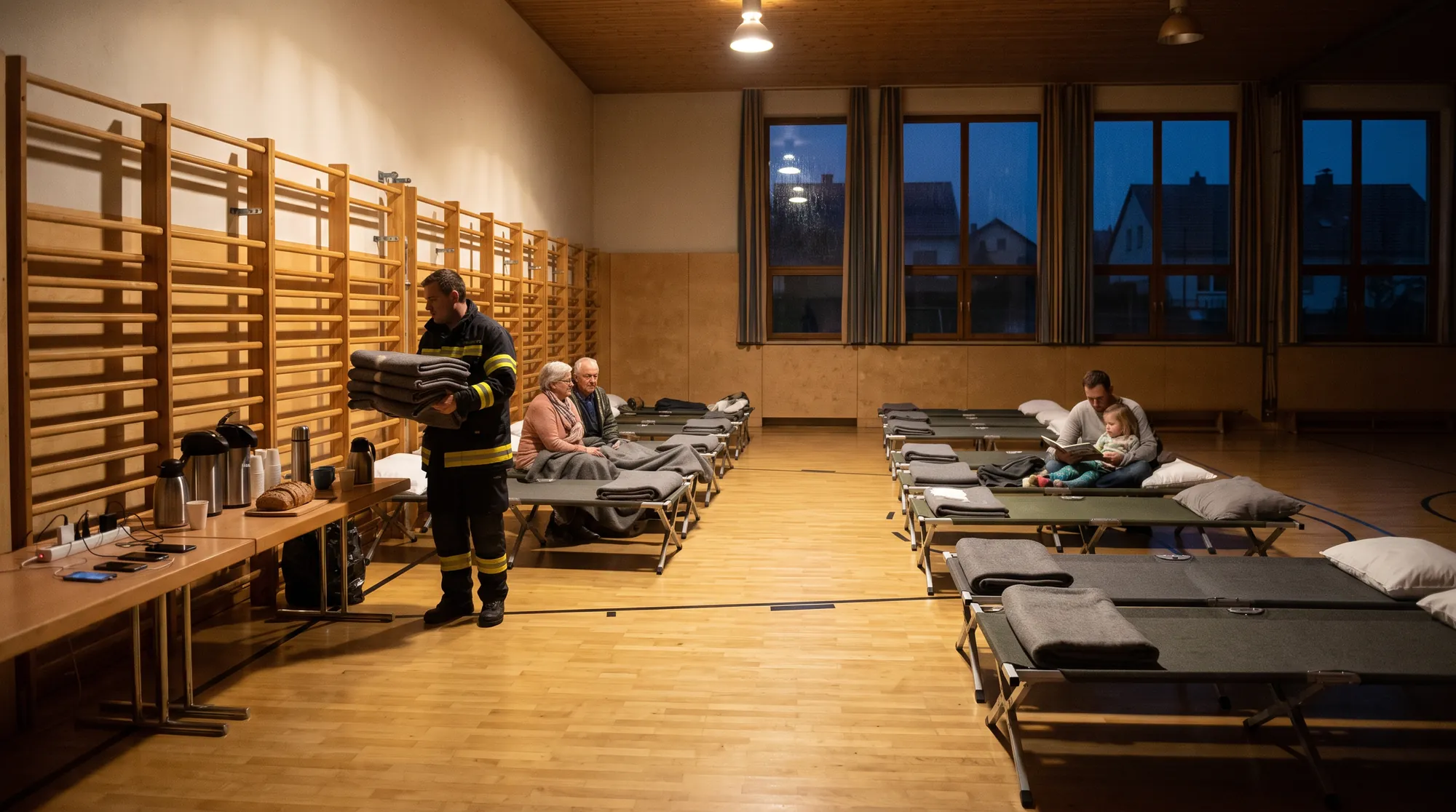
Wherever people are housed, you need light, heat and sockets. A storage unit turns a building into a place people can go.
Preparedness belongs in the budget.
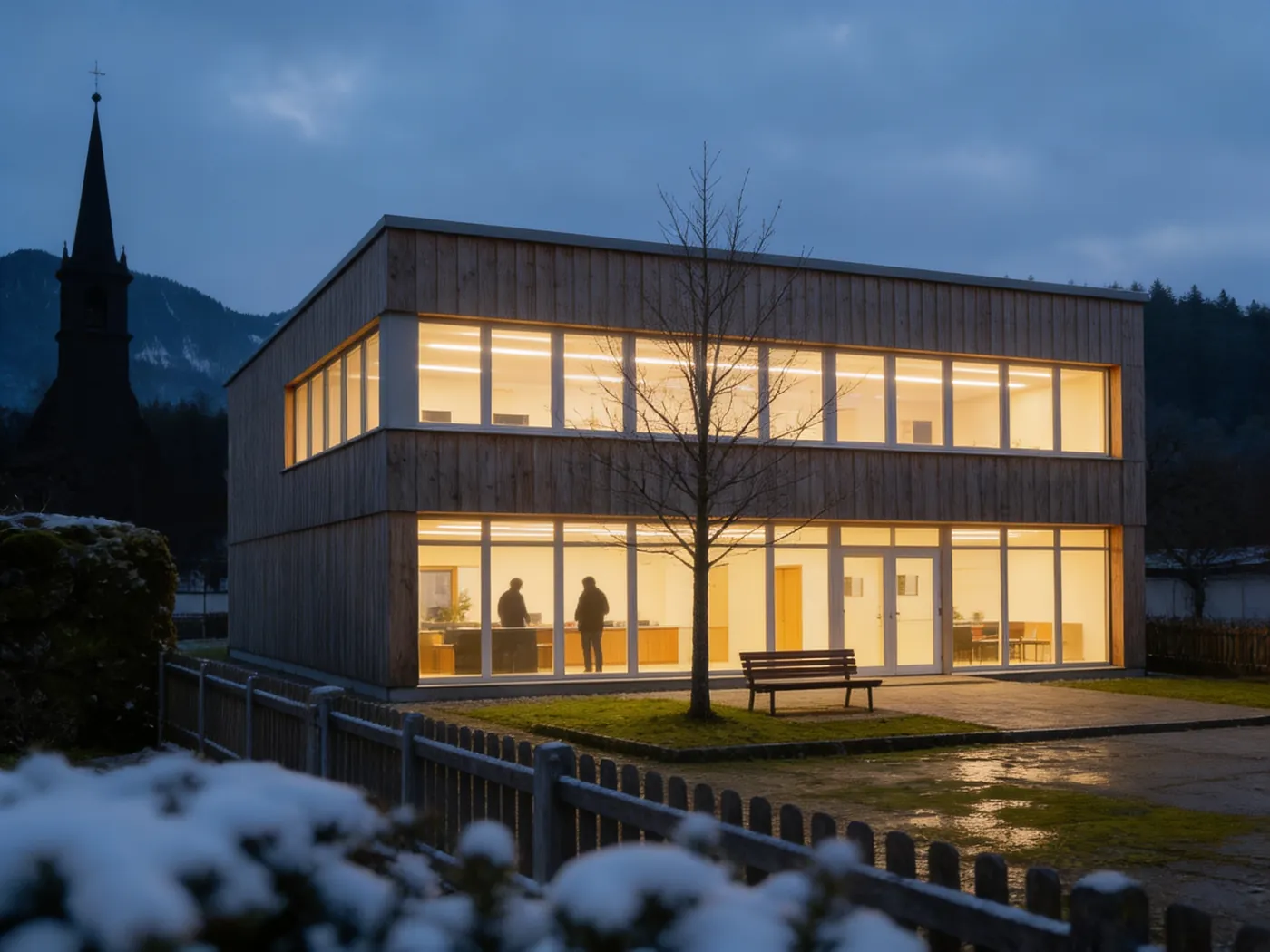
Investment in security of supply is best planned ahead — not in a supplementary budget after the first incident. Which subsidies apply in your case is something we look at with you and substantiate before counting on it.
Let’s talk about your site.
In the site review we go through what has to keep running, for how long, and what that means in terms of storage. Free of charge and without obligation.