
COR.stor · Battery storage
Freedom can be stored.
COR.stor keeps your energy available. Whenever you need it.
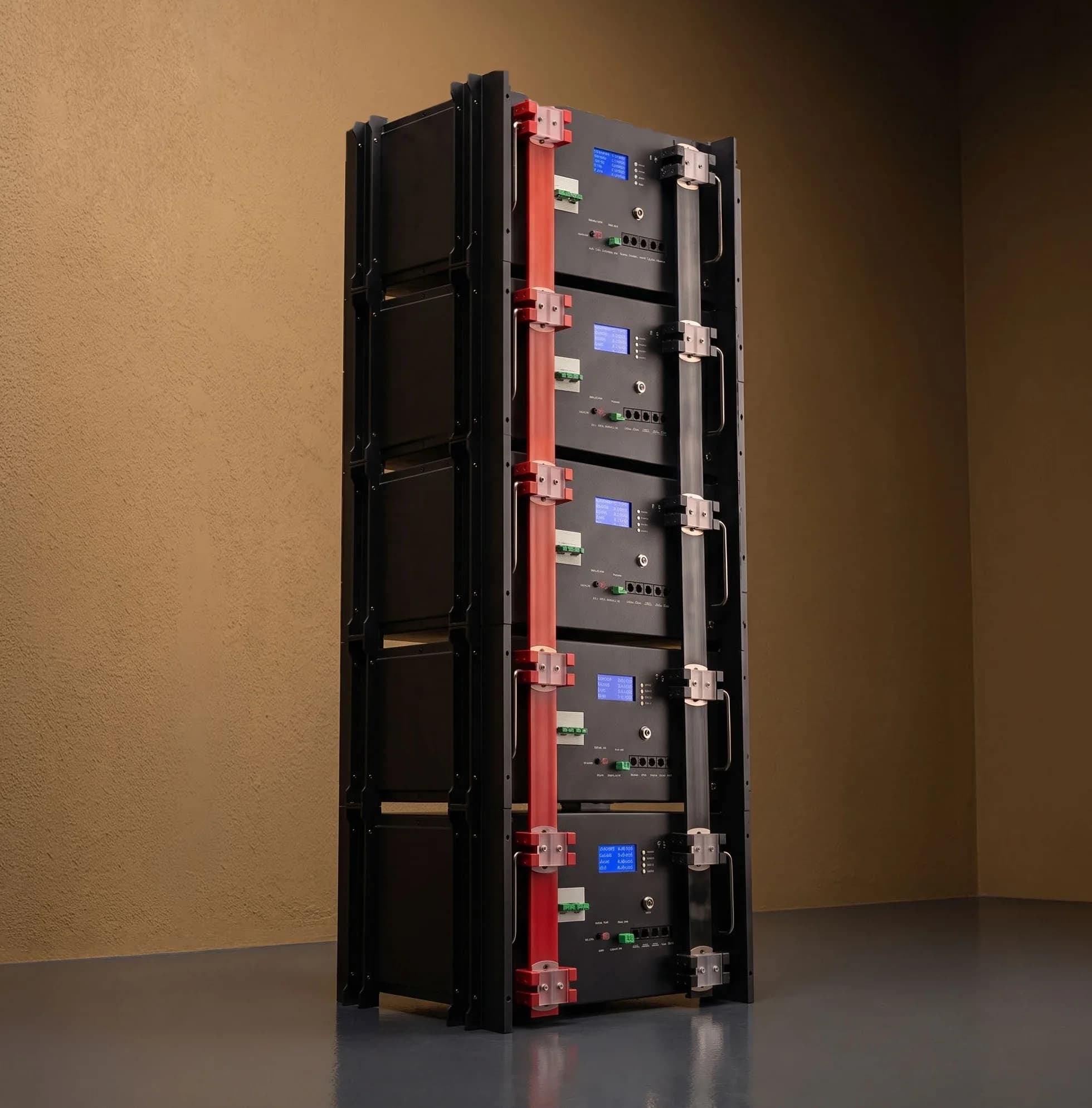
- 70 kWh usable
- 5 + 5 years’ warranty on the battery
- approx. 0.42 m² battery footprint
- typically 20 ms switchover
Three reasons for COR.stor.
Built to last for years.
80 kWh installed, 70 kWh usable. Plus 5 + 5 years’ warranty on the battery.
Plenty of energy. Little space.
70 kWh on a battery footprint of approx. 0.42 m².
Grid down. Power on.
Typically 20 ms switchover when the grid fails.
Store. Use. Secure.
COR.stor stores energy from photovoltaics, COR.set or the grid and keeps it available for when you need it.
01
Store.
The storage unit takes the power from your PV system directly. It also stores power from the grid or, in COR.set, from the COR.gen heat and power plant.
02
Use.
70 kWh of usable capacity is ready whenever you need it. Depending on the variant, COR.stor delivers 15 or 30 kVA of continuous output.
03
Secure.
If the grid fails, COR.stor takes over, typically within 20 ms, and keeps your building running from storage. Automatically, without you lifting a finger.
COR.stor is available on its own. Together with the COR.gen heat and power plant it becomes COR.set.
View COR.setFive packs. 10 kWh of reserve.
Five battery packs work in parallel, each with its own protection.
- 80 kWh installed
- 70 kWh usable
- LiFePO₄
- battery passively cooled
- 5 + 5 years’ warranty on the battery
Three COR.stor units.
A completed installation, commissioned in 2026: three COR.stor units and three inverters, run together as one system.
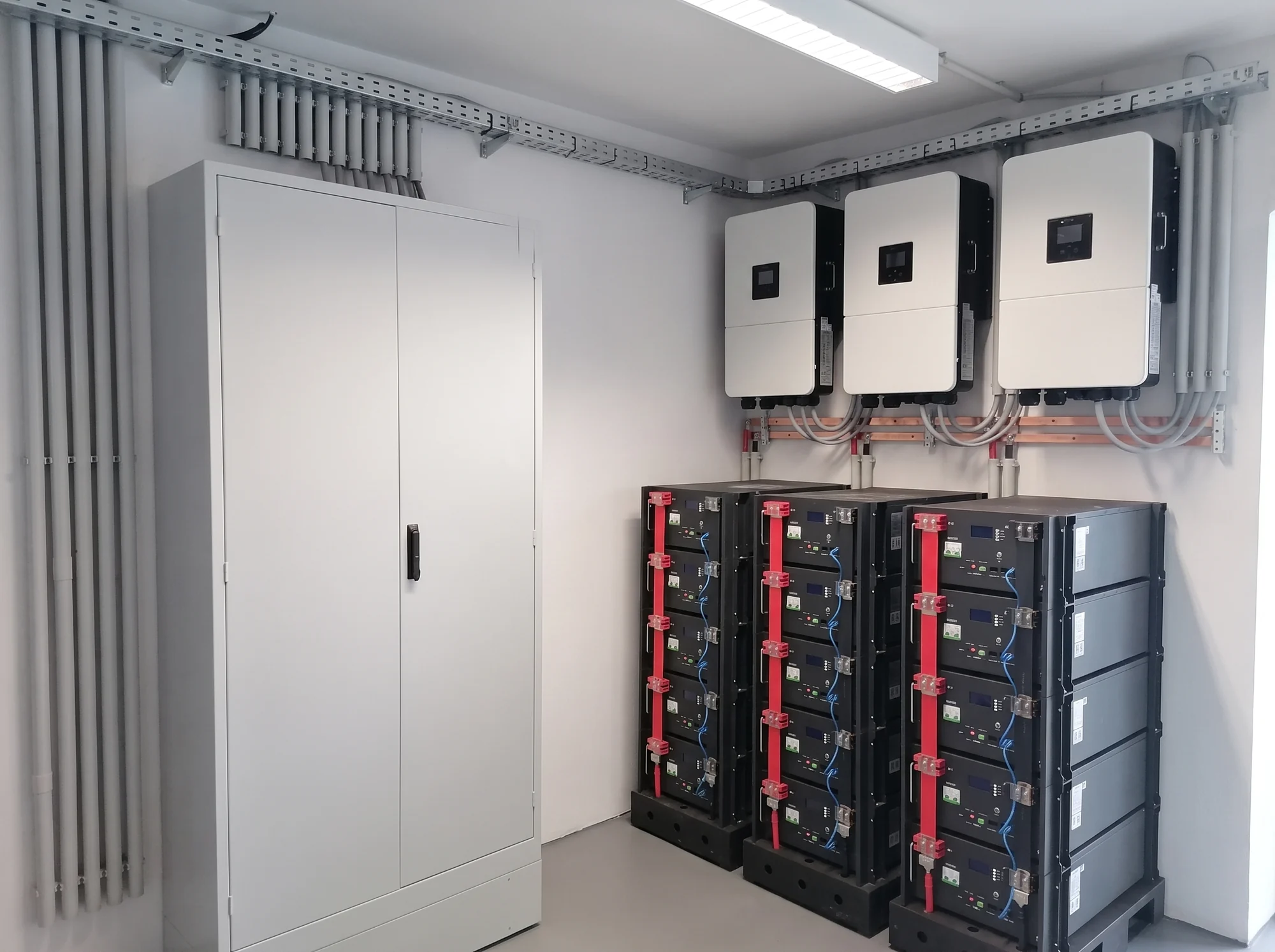
usable, three units
COR.stor in one system
Continuous output (3 × 15 kVA)
Photograph of a completed installation, July 2026. Image editing: room brightened and cleaned up, equipment unchanged.
Key technical data.
The most important figures at a glance. We will send you the full data sheet on request.
COR.stor · CST-15-70 / CST-30-70
| Usable capacity | 70 kWh |
|---|---|
| Installed capacity | 80 kWh |
| Output | 15 kVA (CST-15-70) or 30 kVA (CST-30-70) |
| Dimensions | Battery 523 × 800 × 1,357 mm (W × D × H, incl. base), approx. 0.42 m² footprint · inverter 456 × 750 × 269 mm (W × H × D) |
| Weight | Battery approx. 590 kg |
| Switchover when the grid fails | typically 20 ms, max. 80 ms (depending on the fault) |
| Scaling | 70–210 kWh usable (up to three units) · larger arrays are designed individually |
| Cell chemistry | Lithium iron phosphate (LiFePO4) |
| Cooling | battery passive, no fans and no liquid · inverter with temperature-controlled fans |
| Warranty | 5 + 5 years’ warranty on the battery |
Per technical data sheet · subject to change
Warranty: the 5 + 5 years on the battery are a promotional offer, valid until further notice. For units ordered before the offer is withdrawn, the promised warranty period applies.
All technical data
| Type | CST-15-70 / CST-30-70 |
|---|---|
| Product type | Full-hybrid energy storage system |
| AC rated power | 15 kVA / 30 kVA |
| Capacity | 70 kWh usable (80 kWh gross) |
| Cell chemistry | Lithium iron phosphate (LiFePO4) |
| Design | Low-voltage system, parallel-pack design (5 × 16S1P in parallel) |
|---|---|
| Battery voltage | 51.2 V DC nominal (45.0–57.6 V DC) |
| Charge/discharge rate | 0.5 C continuous @ 25 °C |
| Expandability | 70–210 kWh usable (up to 3 units), larger arrays designed individually |
| Minimum state of charge | Adjustable — sets how much of the usable capacity stays reserved as backup (in addition to the fixed cell-protection reserve) |
| BMS | Pack-based, comprehensive protection (short circuit, over-/undervoltage, temperature, asymmetry, internal resistance …) |
| Display | LCD per battery pack — charge state & status |
| Cooling | Passive through the metal housing (no fans, no liquid cooling) |
| Enclosure | Modular all-metal housing, fire-resistant |
| Ingress protection | IP21 |
| Noise | Battery barely audible (no fans) |
| Inverter type | Hybrid inverter (HF power stage), 1 or 2 in parallel |
|---|---|
| Rated voltage | 230/400 V AC, 3P+N+PE, 50 Hz |
| Continuous power | 15 kVA (1 inverter) / 30 kVA (2 inverters) |
| AC pass-through (grid) | 35 A (1 inverter) / 63 A (2 inverters) |
| Grid → backup switchover | typically 20 ms, max. 80 ms (fault-dependent) |
| Island mode | 15 kVA (1 inverter) / 30 kVA (2 inverters) · overload up to 120% · load asymmetry up to 100% |
| Inverter cooling | Temperature-controlled fans · power derating above 45 °C ambient |
| Inverter noise | below 60 dB(A) |
| Anti-islanding protection | Integrated |
| Generator input | Integrated, 3P+N+PE · for an external backup generator: starts at an adjustable state-of-charge threshold |
| Installation | No external isolating relay required (inline design) |
| PV connection | Direct via MC4 connector |
|---|---|
| Max. DC PV power | 30 kW per inverter |
| MPPT DC power | up to 24 kW (1 inverter) / 48 kW (2 inverters) |
| MPPT voltage range | 160–650 V DC (nom. 550 V) |
| PV inputs | 2 MPPT, 2+2 inputs per inverter |
| Battery dimensions (W×D×H) | 523 × 800 × 1,357 mm (incl. base) |
|---|---|
| Battery weight | approx. 590 kg |
| Inverter dimensions (W×H×D) | 456 × 750 × 269 mm |
| Installation | Indoor · rack separate from inverter (cable 3 m, up to 10 m) |
| Ambient temperature | Battery nom. +15…+30 °C (max. +5…+45 °C) |
| Altitude | up to 2,000 m |
Frequently asked questions about COR.stor.
How long COR.stor supplies power in island mode depends directly on consumption. 70 kWh of usable capacity is available; in COR.set, the heat and power plant can recharge the storage unit while heating during the heating season. For your consumption profile, use the self-test or the calculator.
Take the self-testWhen the grid fails, COR.stor switches to island mode typically within 20 ms and keeps lights, fridge, heating pumps and internet running from storage. How long depends on consumption — the self-test works it out for you. In COR.set, the heat and power plant (COR.gen) recharges the storage unit while heating.
Take the self-testYes. COR.stor is available on its own — as a stand-alone battery storage system, also alongside a PV system. In COR.set it comes matched to the heat and power plant (COR.gen).
LiFePO4 (lithium iron phosphate) is a thermally stable cell chemistry. Each battery pack has its own battery management with comprehensive protection. It is the cell chemistry also used in stationary grid storage.
A LiFePO4 battery lasts longest when it is never fully charged or fully drained. That is why we install 80 kWh of cell capacity and release 70 kWh as usable. The remaining 10 kWh are not released in operation: that is easy on the cells and provides a reserve against natural ageing — not a loss, but deliberate design. That is different from the minimum state of charge: this is adjustable and sets how much of the 70 usable kWh you want to keep in reserve for a power cut.
Yes. COR.stor can be expanded modularly from 70 to 210 kWh usable. Larger arrays are designed individually for the specific property.
Installation is done together with your electrician: DC-side mounting and commissioning by COR, the AC connection by the electrician. Because the battery packs run at safety extra-low voltage (SELV), they can be carried into the plant room individually.
Battery with passive cooling: no fans, no liquid. The inverter has temperature-controlled fans. The five battery packs work in parallel, each with its own battery management and its own protection. The system can report faults to COR Service automatically.