
The heat and power plant
Need heat. Generate power at the same time.
The COR.gen heat and power plant is the generating unit in COR.set. It generates up to 10 kW of heat and, at the same time, up to 2.2 kW of power from biomass such as wood pellets — especially in the heating season, when photovoltaics deliver less and winter electricity is expensive.
- up to 10 kW heat
- up to 2.2 kW electricity
- 92.5% overall efficiency (standard test)
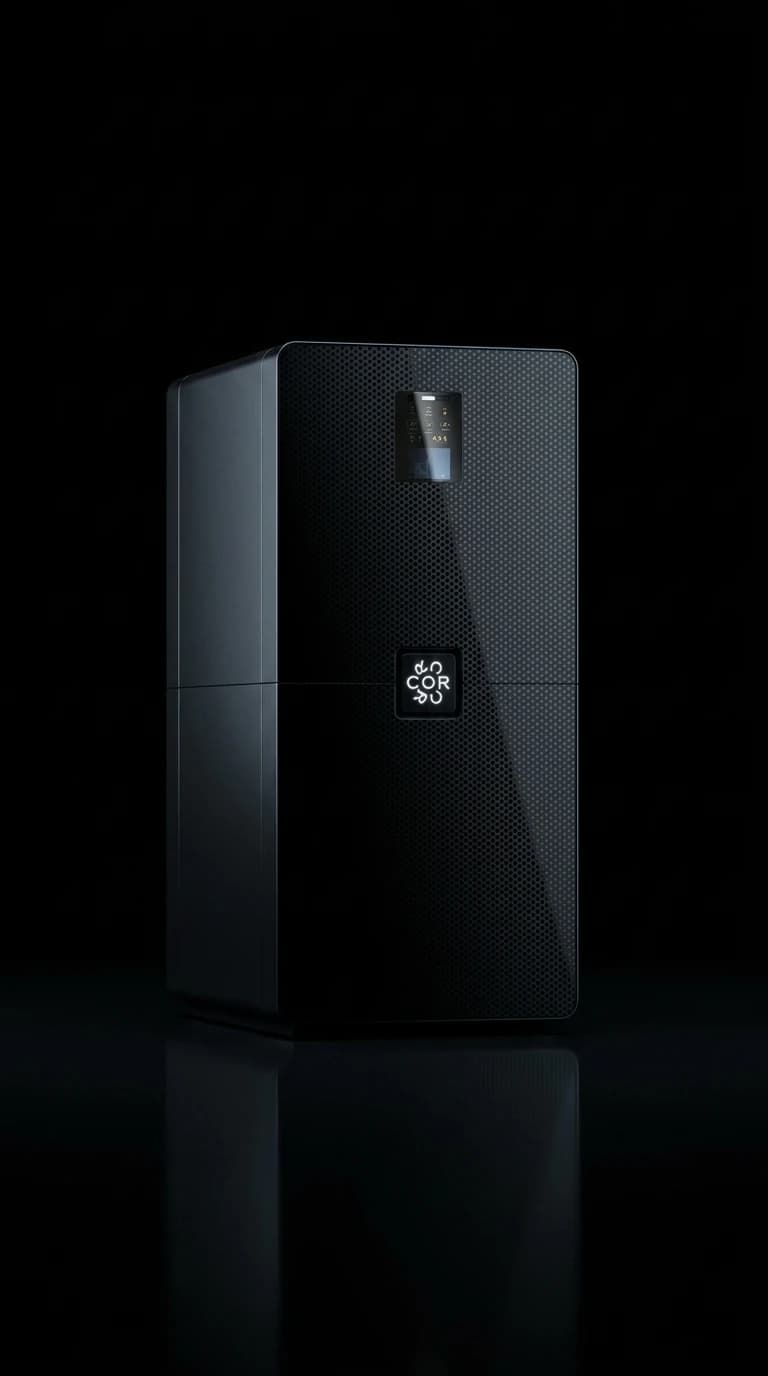
One fuel. Heat and power.
Wood pellets provide heat. COR.gen uses part of that heat to generate electricity as well — in the same unit, from the same fuel.
That is why there is power whenever the heating is running: in the heating season. Heat output follows demand continuously, and power generation runs along with it.
From pellet to heat and power.
Five steps lead from the wood pellet to heat and power in the house.
01
Wood pellets arrive.
The day hopper holds 40 kg and is filled automatically by the COR.vac pellet feed. At rated load, COR.gen uses around 2.7 kg per hour.
02
The sand bed starts to bubble.
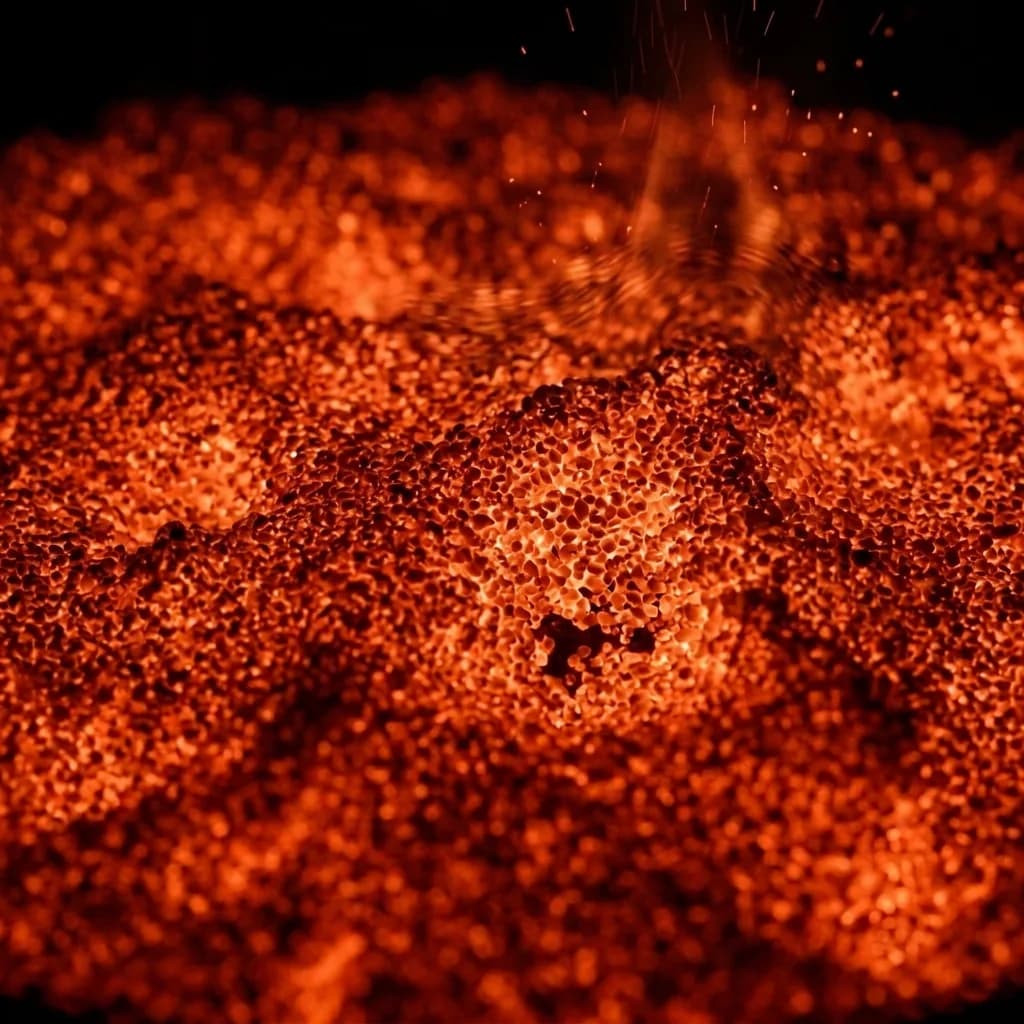
Air flows up through a bed of sand until it behaves like a boiling liquid. At around 800 °C the wood pellets burn in it evenly and without temperature peaks.
03
Two Stirling converters generate power.
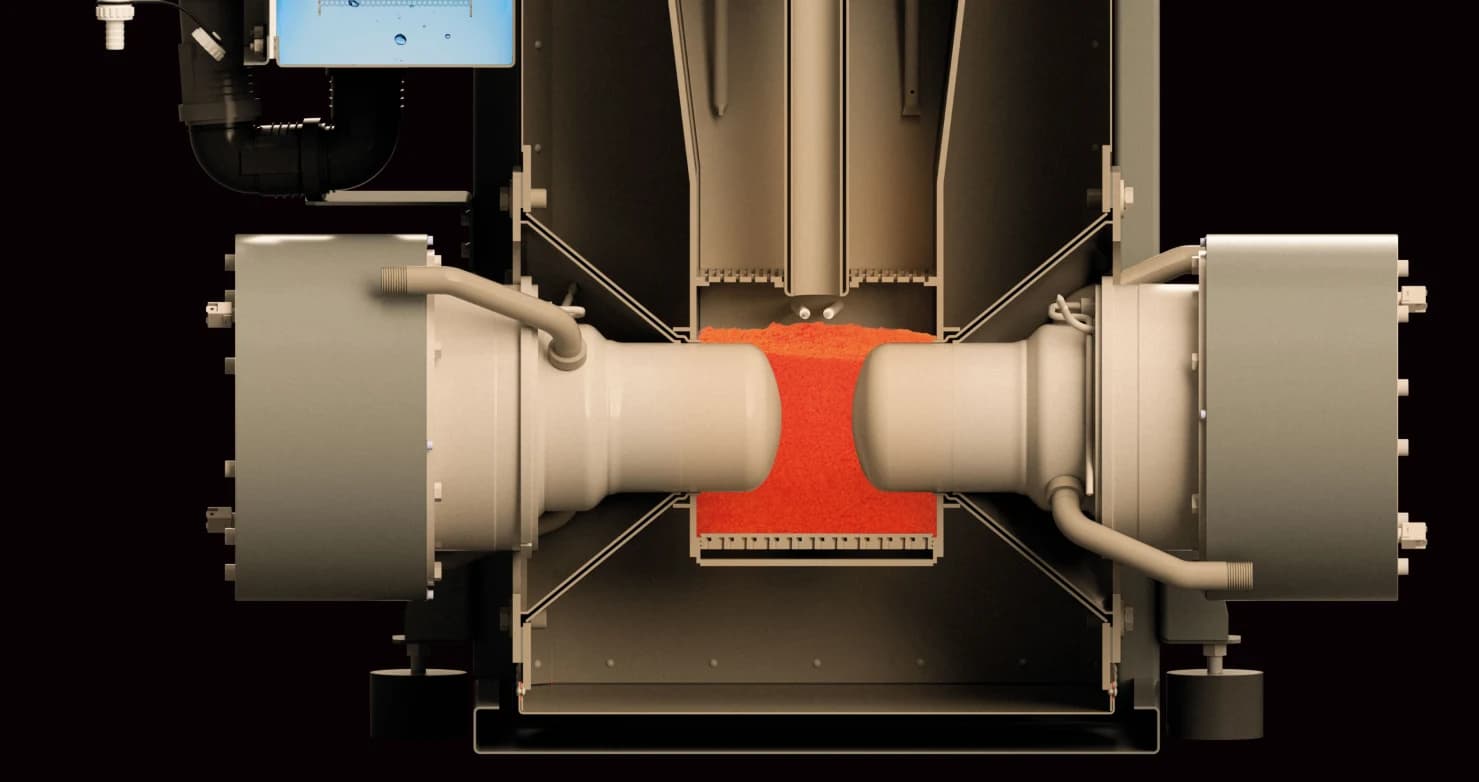
The heater heads of two Stirling converters reach into the sand bed. The heat acts from outside on helium in a closed circuit, a piston oscillates, and a linear generator converts the motion into electricity.
04
The heat goes into the house.
The heat that is not converted into electricity is picked up by the heat exchanger and passed to the heating system — modulating continuously between 3.1 and 10 kW, with flow temperatures up to 65 °C.
05
No ash drawer to empty.
The flue gas scrubber binds the ash in water. COR Service takes care of cleaning during maintenance.
Controlled combustion.
In the fluidised bed, wood pellets burn in a bed of sand with air flowing through it — at around 800 °C, evenly and without temperature peaks. That is the thermal basis for heat and power.
Heat becomes power.
Two Stirling converters use the temperature difference in the system: they convert heat first into motion and then into electrical energy — with no additional combustion.
Flue gas scrubbing built in.
Flue gas scrubbing is part of the system, not an accessory. It binds the ash in water. COR Service takes care of cleaning during maintenance.
Key technical data.
| Designation | COR.gen TwinPower · type CTP-10-2 |
|---|---|
| Heat output | 3.1 – 10 kW, continuously modulating |
| Electrical output | 0.5 – 2.2 kW from two Stirling converters |
| Overall efficiency | 92.5% in standard test (net calorific value, direct method) |
| Fuel | Wood pellets class A1 (EN ISO 17225-2) |
| Flow temperature | up to 65 °C |
| Sound level | below 60 dB(A) |
| Dimensions (D × W × H) | 127 × 92 × 182 cm |
| Weight | approx. 650 kg |
| Standard | EN 303-5, class 5 |
| Servicing | yearly or every 2,000 operating hours |
COR.gen is not available on its own; it is the generating unit in COR.set and COR.tainer.
Questions about fuel, installation and servicingThe heat and power plant in the system.
In COR.set, the COR.gen heat and power plant works with the COR.stor storage unit and the COR Platform as one system: generating heat, producing your own winter power, storing energy and using as much of it as possible yourself. COR.tainer integrates this system in a container for installations without an existing plant room and is currently in development.