
Stirling technology
Heat becomes power.
Stirling converters turn a temperature difference into mechanical and then into electrical energy.
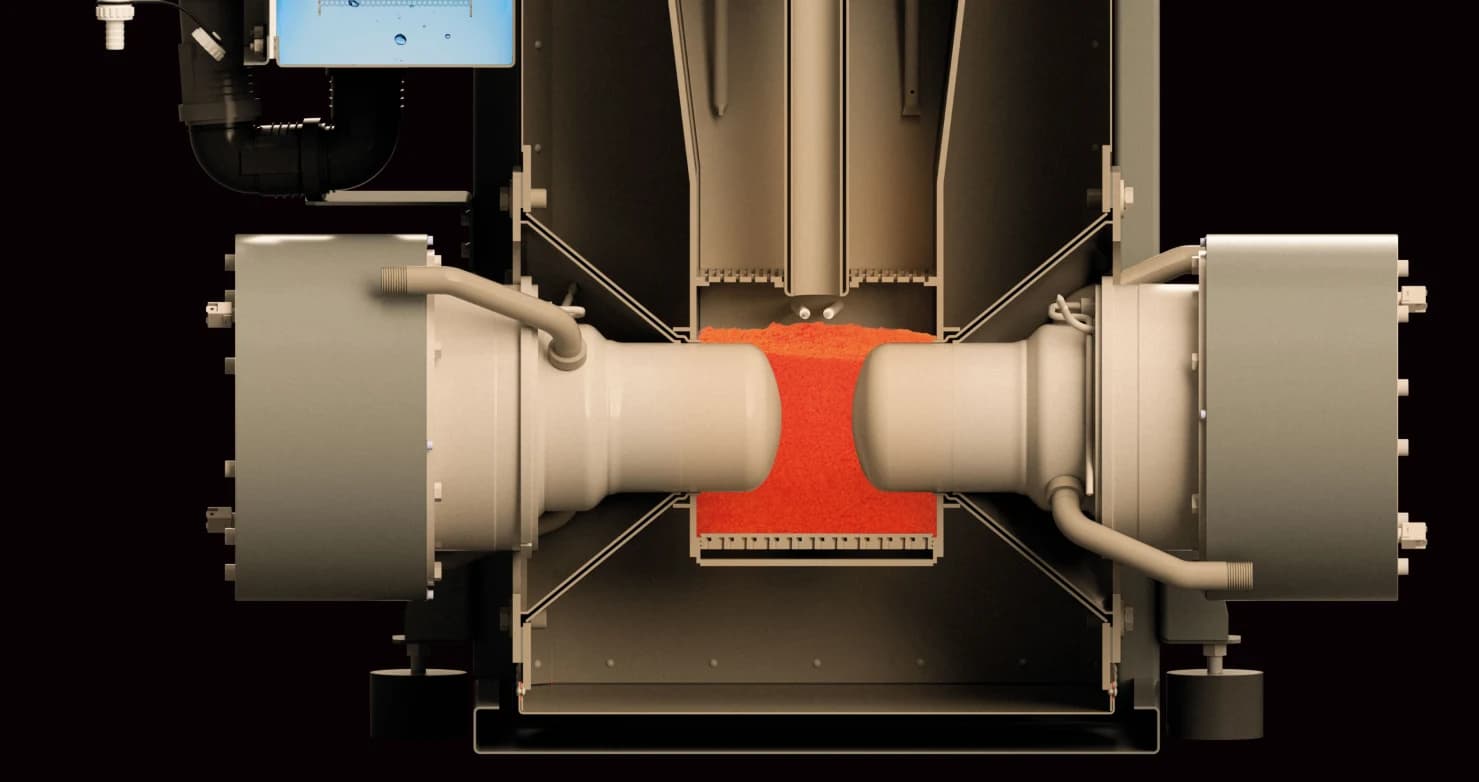
Power from heat that is generated anyway.
Generating electricity needs no additional combustion process. It uses part of the heat that is already present in the system.
A Stirling converter is heated from outside. In the heat and power plant, the heater heads of two free-piston Stirling converters reach into the hot sand bed of the fluidised bed.
01
Temperature difference
The heat acts from outside on helium in a closed circuit. The gas is heated and cooled in turn, so it expands and contracts again.
02
Motion
The gas sets a freely oscillating piston in motion — with no crankshaft and no lubricating oil.
03
Electrical energy
A linear generator converts the motion of the piston into electricity. The heat that is not converted into electricity goes to the heating system via the heat exchanger.
The Stirling converters are bought in. COR integrates them into the system.
Up to 2.2 kW of electricity.
Together the two converters deliver 0.5 to 2.2 kW of electricity — modulating with the heat output, in the heating season.
Power, maximum
0.5 to 2.2 kW, from two Stirling converters
Heat, maximum
3.1 to 10 kW, continuously modulating
Overall efficiency, standard test
based on the net calorific value, direct method